A Letter to You
August 16, 2026
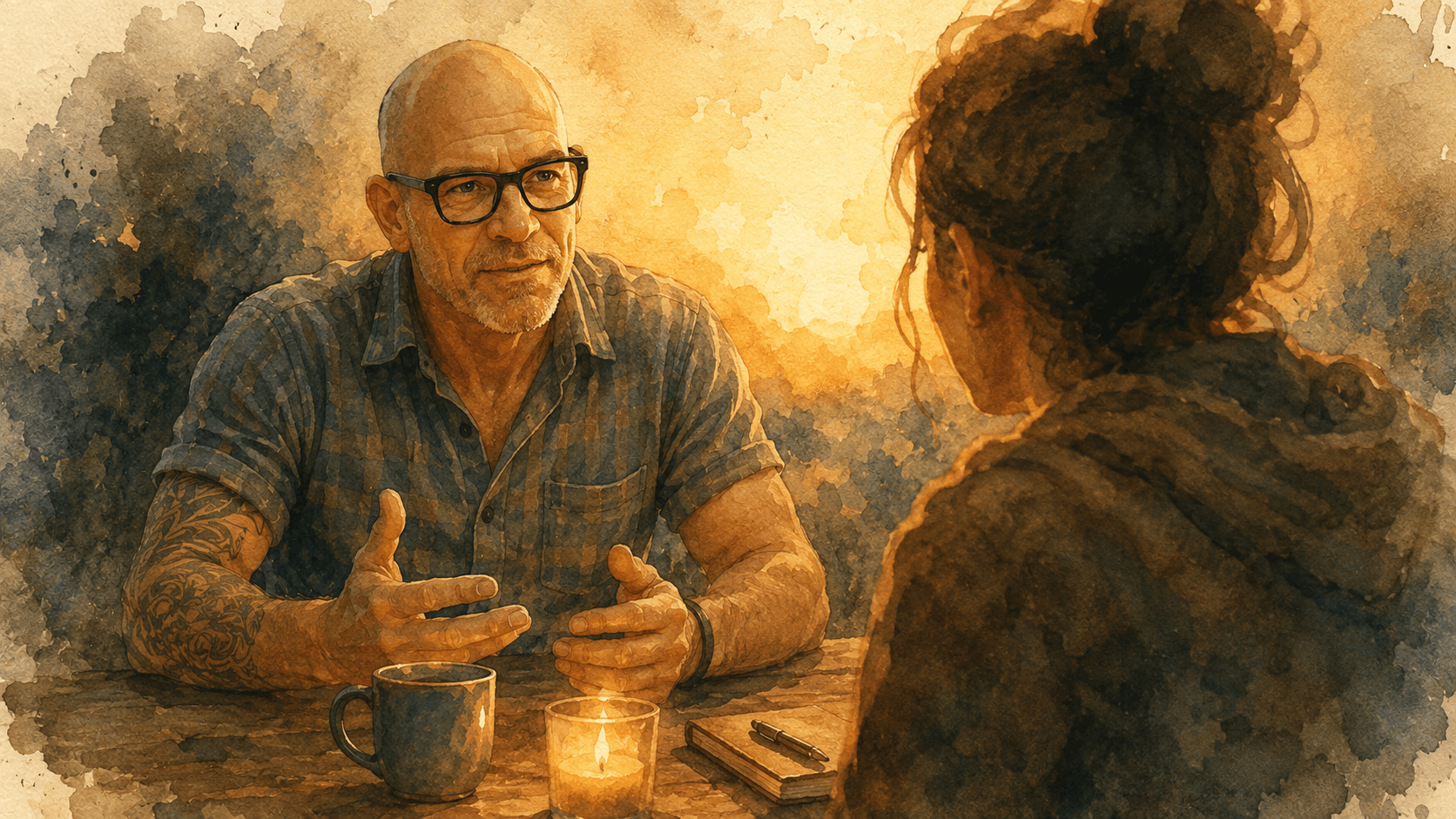
Dear Reader,
After publishing several essays on this channel, I realized I never properly introduced myself.
Maybe you've read a thing or two from me already. Maybe you stumbled upon this newsletter by chance.
Either way — you don't really know who's writing here.
I want to change that with this newsletter. The next few editions are meant to serve as a foundation: to get to know me and my work, and to build a bridge between my life and yours.
So let's begin.
Who am I, anyway?
My name is Dirk. I'm 56 years young and I live without a fixed address, out of a 7kg Osprey backpack that holds everything I own and everything I need to keep my life light.
Before this, I lived for 10 years in a 55-year-old Mercedes-Benz truck converted into a camper. I sold it last month to start a new chapter — to live even lighter at 56.
Maybe I've played through the level Earth and now I'm entering the phase of lightness — Air.
That's the current state of things.
Why I'm telling you this at all
Motivation and curiosity are two of my strongest drives and strengths. My Why.
I'm writing this letter as if you were sitting right in front of me. I don't like writing from some elevated, detached meta-perspective. I prefer a human, honest, direct voice.
It's about connection. The fact that you're reading these words I'm writing right now means we already have a connection.
Author and reader.
And first, I want to thank you for taking the time to read these lines. That's not a given.
I want to deepen this connection that already exists. To underpin it.
What do I even want with this newsletter? Am I selling something? A book? A course? Consulting? Maybe someday. Not right now. Since honesty is another important resource for me, I'll answer this question you might be asking yourself right up front.
Trust needs clarity.
Today is about something else.
Today is about: Where do I come from? What brought me here? And why is it worth it for you to stay?
You can probably already see — this won't be a 5-step-to-enlightenment channel. It's an attempt to build a bridge from my world to yours, from someone who has lived through systems and is now writing about what he sees.
Before I tell you my story
What comes next is not easy material.
I'm not writing it to shock you, or to sound dramatic.
I'm telling you because — after sitting with it for a long, intense time — it is the key to everything I write and do. My perspective on freedom, on systems, on control and surrender doesn't come from books. It comes from two moments when I stopped fighting.
I call them my capitulations.
Maybe you know the feeling. When something inside you says: Fuck, that's enough. It can't and must not go on like this. This is the end. Maybe you also feel a crack in your life. A quiet restlessness. The feeling that you're living a life that isn't yours.
Then these stories are for you.
Mine begins in 1989.
The first crack
I was 18. Outwardly a young, wild punk in the eighties.
Conflicts in my childhood and teenage environment led to unrestrained rebellion.
Questioning everything. Upheaval. From age 11: cigarettes, alcohol, theft, crime — all of it shaped my late childhood.
At 15, I was sent to a Catholic boarding school. I couldn't and wouldn't adapt, let alone submit. To anything.
So my early youth ended in a dead end at 19, after years of alcohol, drugs, and self-harm.
One day, in my shared apartment with my roommates, I took psilocybin mushrooms.
With that, I opened a door I couldn't close again. A doorway to my soul that my psyche had kept locked for good reason.
A battlefield. My deepest state of mind, shaped by years of struggle and violence. Psychic and physical. I was now face to face with it. My greatest enemy until then. Not outside.
Inside. Myself.
From one moment to the next, there was no separation between inside and outside. I was the outside. I was the inside. No distance. No observer. Only direct experience.
Afterward, I perceived this experience as an enemy, as an attack. With all the respect and humility you can muster when the ground is pulled out from under you.
Still, I wanted to know. From then on, I treated psilocybin like candy and took more and more, until I developed a severe psychosis.
In the final phase of that time, I had to numb myself with high-proof alcohol from the moment I woke up until I passed out, because I couldn't bear it otherwise. My nervous system was in permanent overdrive. Like too much electricity on every wire.
One day, it became clear. Like a miracle.
You cannot take your life. What you can take is the aliveness of your body. But you are not your body. You know that. Your suffering will not end through suicide.
So choose.
Left: Put the glass down. Walk into annihilation. Let yourself be devoured by life. And see if you survive.
Right: Stay trapped in your mind. For eternity.
I chose left.
What happened next, I can only describe as an implosion. The fear and panic became so intense that everything condensed — until it burst.
The so-called I am experiencing exploded.
There was only Nothing and Everything at once.
After that, everything was like glass. Unexplainable to anyone.
Until months later, I found the book. Or it found me.
The Tibetan Book of Living and Dying — Sogyal Rinpoche.
A friend gave it to me. I read it and thought:
Oh. So this is normal.
Someone had words for what I had experienced. I wasn't crazy. I wasn't alone.
The second capitulation
I can imagine this sounds hard to read. It was. But I'm not one for sugarcoating. I had no choice. I had to face the facts.
You might think: That was it. He stayed clean. Got his life together.
Unfortunately — or fortunately — it wasn't that simple.
For some reason, years later, I had landed in that hell again. Pain. Desperation. Self-hatred.
Why? Because I thought, after being completely clean in 1989, I had to try it one more time.
This time was different. No psychosis. No panic attacks. A different layer. Creeping.
It started with harmless beer drinking with friends and my brother. 1991 or 1992. Step by step, I slid back. Self-pity. Hopelessness. Meaninglessness. I found my home in consumption. A genuine longing for that world of pain.
Then speed. Amphetamine. Combined with extreme alcohol consumption, the crashes got worse. During a speed run, you don't notice you're getting drunk. You suddenly feel strong. Fulfilled. On fire. Alive.
Supposedly.
Later, cocaine joined in. My daughter was born around this time. And I wasn't able to be fully present — something I would later feel deep shame about. My partner kept me at a distance. A vicious cycle.
Until she fell in love with someone else and moved to the Baltic Sea with our daughter.
I followed. Left everything behind in my old town. Winter. Right before Christmas.
Eventually I found a shared apartment near Hamburg. In an alternative newspaper.
Coincidence?
A doctor lived there who worked at a facility for drug addicts. He recommended inpatient therapy.
I was terrified of it. Psychiatry. The system. Surrendering to the system I had fought against my entire life. That was worse than any capitulation.
I did it anyway. As a punk. As an enemy of the system.
But that decision — like the first one in 1989 — laid the foundation I stand on today. When I lose everything, I know it goes on. Always.
An unshakable basic trust in life has never left me since.
And I am grateful that I surrendered to life with open arms without losing my autonomy. Only through that did I find it.
What comes next
First of all — thank you for making it this far.
Maybe you're asking yourself: What does this have to do with me?
The next newsletters will show exactly that. What I learned from these experiences. The systems I moved through. The insights that only revealed themselves years later. Why my perspective is different. And what that has to do with your life.
This newsletter will be personal. If you read here, you'll know who writes here.
If you haven't subscribed yet, do it now.
Back then, I didn't know that surrender was the beginning of everything.
Begin with the workbook
Receive SELF / AUTHORED — a free workbook for autonomy, awareness, and action — plus one letter a week.
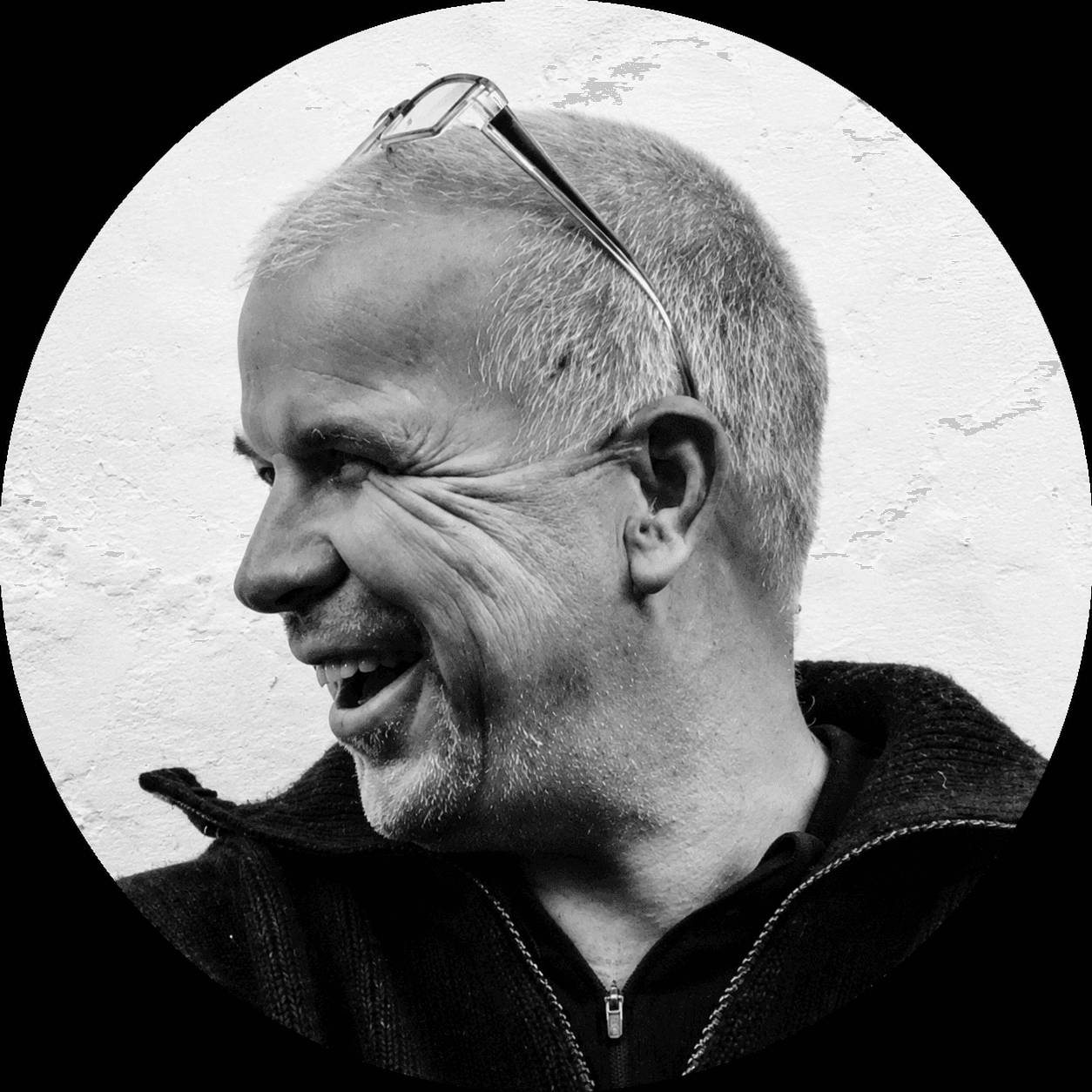
Get the free workbook + weekly letterWho's Writing This?
Dirk spent ten years living out of a truck, no fixed address, just whatever the work and the weather asked for. Long enough to feel exactly what it costs when your days belong to someone else's system. He's since worked outdoor education, wholesale, disability care, logistics — different rooms, same habit: read the system, name what's really running it, find where you stand in it.